
If it's in the News, it's in our Polls. Public opinion polling since 2003.

Public Content

Most Recent Releases

March 21, 2013

Voters Again Trust GOP More Than Democrats on Economy

Voters continue to trust Democrats more than Republicans on nine of 15 major issues regularly tracked by Rasmussen Reports, but the GOP has regained the trust advantage on the key issues of the economy and national security. 

New Rasmussen Reports national telephone surveying finds that 45% of Likely U.S. Voters now trust Republicans more than Democrats when it comes to handling the economy. Forty percent (40%) trust Democrats more. (To see survey question wording, click here.)

(Want a free daily e-mail update? If it's in the news, it's in our polls). Rasmussen Reports updates are also available on Twitter or Facebook.

Three national surveys of 1,000 Likely Voters each were conducted on March 10-11, March 14-15 & 18-19, 2013 by Rasmussen Reports. The margin of sampling error is +/- 3 percentage points with a 95% level of confidence. Fieldwork for all Rasmussen Reports surveys is conducted by Pulse Opinion Research, LLC. See methodology.

White letter R on blue background
March 21, 2013

Republicans Must Show Support for Hispanic Dreams By Michael Barone

Rarely does a political party issue a document so scathingly critical of itself and its most recent presidential nominee as the report of the five-member Growth and Opportunity Project of the Republican National Committee.   

March 21, 2013

50% Favor Breaking Up Nation’s Largest Banks

A Senate report released this month revealed that the nation’s largest bank, JP Morgan Chase, manipulated and withheld key information during its record trading losses last year, prompting even stronger belief that the big banks haven’t learned their lesson after receiving government bailouts in 2008. Most Americans want to end government subsidies for these ‘too big to fail’ institutions and half want to see those megabanks broken up.

A new Rasmussen Reports national telephone survey shows that 50% of U.S. Adults favor a plan to break up the 12 megabanks, which currently control about 69% of the banking industry. Twenty-three percent (23%) oppose breaking up the largest banks, while another 27% are undecided. (To see survey question wording, click here.)

How did you do in this week’s Rasmussen Challenge? Check the leaderboard.

The survey of 1,000 Adults nationwide was conducted on March 19-20, 2013 by Rasmussen Reports. The margin of sampling error is +/- 3 percentage points with a 95% level of confidence. Field work for all Rasmussen Reports surveys is conducted by Pulse Opinion Research, LLC. See methodology.

White letter R on blue background
March 21, 2013

Multi-Member Districts: Just A Thing of the Past? By Thomas F. Schaller

Given that at least a third of Americans identify strongly with neither major party, it seems anomalous that the two major parties boast all but two of the 535 members of Congress, 49 of 50 state governors, 99% of the nearly 7,400 state legislators nationwide and every American president for more than a century-and-a-half. Many third-party supporters are convinced that Democrats and Republicans at the state and national level collude to restrict third-party ballot access and make fundraising more difficult for third parties and their candidates.

White letter R on blue background
March 21, 2013

The Newsmaker Memo: an Interview With AFL-CIO President Richard Trumka By Joe Conason

Richard Trumka, president of the AFL-CIO, recently spoke with The National Memo about the sequester's automatic budget cuts, the danger of cuts to Social Security, the Keystone XL pipeline, immigration reform, President Obama and how to defend labor in an era of attacks on the right to organize.  

March 21, 2013

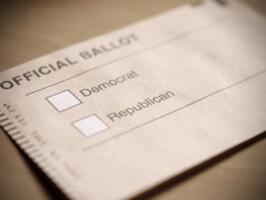
59% Think Federal Budget Deficit Is Too Big

The Washington Post’s Ezra Klein and others on the political left have begun arguing that the federal deficit is “if anything, too small.” Voters disagree.

A new Rasmussen Reports national telephone survey finds that just 20% of Likely U.S. Voters share Klein’s belief that the current federal deficit is too small. Fifty-nine percent (59%) think it is too big and 13% say it’s about right. (To see survey question wording, click here.)

(Want a free daily e-mail update ? If it's in the news, it's in our polls). Rasmussen Reports updates are also available on Twitter or Facebook.

The survey of 1,000 Likely Voters was conducted on March 14-15, 2013 by Rasmussen Reports. The margin of sampling error is +/- 3 percentage points with a 95% level of confidence. Field work for all Rasmussen Reports surveys is conducted by Pulse Opinion Research, LLC. See methodology.

March 20, 2013

31% Say U.S. Heading in Right Direction

Thirty-one percent (31%) of Likely U.S. Voters say the country is heading in the right direction, according to a new Rasmussen Reports national telephone survey taken the week ending Sunday, March 17.

Voter optimism in the nation’s current course is up two points from the previous week but still remains at a level not seen since August of last year. Confidence in the nation's course peaked at a high of 43% the week before Election Day but has gradually come down since then.

In the latest survey, 60% of voters think the country is heading down the wrong track. That's down four points from 64% the week before which tied the highest level of pessimism measured since August 2012. From January 2009 until October 2012, belief that the country was on the wrong track ranged from 55% to 80%, but it tracked in the low 50s from just before Election Day until early December.

(Want a free daily e-mail update? If it's in the news, it's in our polls). Rasmussen Reports updates are also available on Twitter or Facebook.

The national telephone survey of 3,500 Likely Voters was conducted by Rasmussen March 11-17, 2013. The margin of sampling error for the survey is +/- 2 percentage points with a 95% level of confidence. Fieldwork for all Rasmussen Reports surveys is conducted by Pulse Opinion Research, LLC. See methodology.

March 20, 2013

41% Rather Have Deficit with Lower Taxes, Spending

Most voters think it is important to balance the federal budget but not if it means higher levels of taxes and government spending.

The latest Rasmussen Reports national telephone survey finds that only 36% of Likely Voters would rather have a balanced budget with higher levels of taxes and spending than a deficit with lower levels of taxes and spending. Forty-one percent (41%) prefer a deficit with lower taxes and less spending, while another 23% are undecided.  (To see survey question wording, click here.)

The survey of 1,000 Likely Voters was conducted on March 16-17, 2013 by Rasmussen Reports. The margin of sampling error is +/- 3 percentage points with a 95% level of confidence. Field work for all Rasmussen Reports surveys is conducted by Pulse Opinion Research, LLC. See methodology.
March 20, 2013

65% Say Struggling Homeowners Should Downsize

Most Americans continue to believe homeowners who go "underwater" on their mortgage should sell their home and buy a cheaper one. But most homeowners continue to say they haven’t missed or been late on a payment recently and don’t expect to be late in the near future.

A new Rasmussen Reports national telephone survey shows that 65% of American Adults believe that if someone can’t afford to make increased mortgage payments, he or she should sell their home and buy a less expensive one. Twenty-one percent (21%) believe the government should assist that person in making those payments. Fourteen percent (14%) are undecided. (To see survey question wording, click here.)

(Want a free daily e-mail update? If it's in the news, it's in our polls). Rasmussen Reports updates are also available on Twitter or Facebook

The survey of 1,000 Adults was conducted on March 17-18, 2013 by Rasmussen Reports. The margin of sampling error is +/- 3 percentage points with a 95% level of confidence. Fieldwork for all Rasmussen Reports surveys is conducted by Pulse Opinion Research, LLC. See methodology.

March 20, 2013

71% Favor Proof of Citizenship Before Allowing Voter Registration

The U.S. Supreme Court heard arguments Monday on the federal government’s challenge of an Arizona law that requires proof of citizenship before allowing someone to register to vote. But most voters think everyone should have to prove their citizenship before being allowed to sign up for voting and don’t believe such a requirement is discriminatory.

The latest Rasmussen Reports national telephone survey finds that 71% of Likely U.S. Voters believe everyone should be required to prove his or her U.S. citizenship before being allowed to register to vote. Twenty-one percent (21%) disagree and oppose such a requirement. (To see survey question wording, click here.) 

Win an IPad: Take the Rasmussen Challenge. Entries must be submitted by 11:59 p.m. EST.

(Want a free daily e-mail update ? If it's in the news, it's in our polls). Rasmussen Reports updates are also available on Twitter or Facebook.

The survey of 1,000 Likely Voters was conducted on March 18-19, 2013 by Rasmussen Reports. The margin of sampling error is +/- 3 percentage points with a 95% level of confidence. Field work for all Rasmussen Reports surveys is conducted by Pulse Opinion Research, LLC. See methodology.

White letter R on blue background
March 20, 2013

The Blob That Ate Children By John Stossel

Shortly after I did my first TV special on education, "Stupid in America," hundreds of union teachers showed up outside my office to yell at me. They were angry because I said union rules were a big reason American kids don't learn.    

March 20, 2013

16% Think Budget Can Be Balanced Without Spending Cuts

Voters are evenly divided over whether the federal budget can be balanced without tax increases but strongly believe spending cuts are necessary to achieve that goal.

A new Rasmussen Reports national telephone survey finds that just 16% of Likely U.S. Voters think it is possible to balance the federal budget without cutting spending. Seventy-one percent (71%) disagree and say it is not possible. Thirteen percent (13%) are not sure. (To see survey question wording, click here.)

(Want a free daily e-mail update ? If it's in the news, it's in our polls). Rasmussen Reports updates are also available on Twitter or Facebook.

The survey of 1,000 Likely Voters was conducted on March 16-17, 2013 by Rasmussen Reports. The margin of sampling error is +/- 3 percentage points with a 95% level of confidence. Field work for all Rasmussen Reports surveys is conducted by Pulse Opinion Research, LLC. See methodology.

March 19, 2013

46% Oppose Single-Payer Health Care System

Nearly half of voters nationwide continue to oppose a health care system in which the government provides coverage for everyone, but there is predictable partisan disagreement.

A new Rasmussen Reports national telephone survey finds that 38% of Likely Voters favor a single-payer health care system, while 46% oppose such a system.  Another 16% are not sure.  (To see survey question wording, click here.)

(Want a free daily e-mail update? If it's in the news, it's in our polls). Rasmussen Reports updates are also available on Twitter or Facebook.

The national survey of 1,000 Likely Voters was conducted on March 16-17, 2012 by Rasmussen Reports. The margin of sampling error is +/- 3 percentage points with a 95% level of confidence. Field work for all Rasmussen Reports surveys is conducted by Pulse Opinion Research, LLC. See methodology.

March 19, 2013

55% Feel Connected to Their Hometown

For many Americans, their connection to the town and state they grew up in is stronger than their connection to friends from those places.

A new Rasmussen Reports national telephone survey finds that 55% of American Adults feel at least somewhat connected to the town they grew up in, including 28% who feel Very Connected. Forty-one percent (41%), on the other hand, are not connected to their hometown, including 16% who are Not At All Connected. (To see survey question wording, click here.)

Win an IPad: Take the Rasmussen Challenge.

 (Want a free daily e-mail update? If it's in the news, it's in our polls). Rasmussen Reports updates are also available on Twitter or Facebook

The survey of 1,000 Adults nationwide was conducted on March 15-16, 2013 by Rasmussen Reports. The margin of sampling error is +/- 3 percentage points with a 95% level of confidence. Field work for all Rasmussen Reports surveys is conducted by Pulse Opinion Research, LLC. See methodology

March 19, 2013

52% Say Home Worth More Than What They Owe

While short-term confidence about home values is down from last month’s high , the number of homeowners who say their home is worth more than what they still owe on it is back over 50%. 

The latest Rasmussen Reports national telephone survey shows that 30% of U.S. Homeowners expect their home’s value to go up over the next year. Fifteen percent (15%) expect the value to go down, while 51% say their home’s value will stay about the same over the next year. (To see survey question wording, click here.)

Win an IPad: Take the Rasmussen Challenge.

The survey of 646 Homeowners nationwide was conducted on March 17-18, 2013 by Rasmussen Reports.  The margin of sampling error is +/- 4 percentage points with a 95% level of confidence. Fieldwork for all Rasmussen Reports surveys is conducted by Pulse Opinion Research, LLC. See methodology.

March 19, 2013

7% Think Balanced Budget Very Likely In Next 10 Years

Voters strongly believe in the importance of a balanced budget, but most don’t expect the federal budget to be balanced in the next 10 years despite competing deficit-cutting plans now before Congress.

A new Rasmussen Reports national telephone survey finds that 87% of Likely U.S. Voters consider it at least somewhat important to balance the federal budget. This includes 63% who view it as Very Important. Only 10% feel it’s not very or Not At All Important to balance the budget. (To see survey question wording, click here.)

Win an IPad: Take the Rasmussen Challenge.

(Want a free daily e-mail update ? If it's in the news, it's in our polls). Rasmussen Reports updates are also available on Twitter or Facebook.

The survey of 1,000 Likely Voters was conducted on March 16-17, 2013 by Rasmussen Reports. The margin of sampling error is +/- 3 percentage points with a 95% level of confidence. Field work for all Rasmussen Reports surveys is conducted by Pulse Opinion Research, LLC. See methodology.

White letter R on blue background
March 19, 2013

Comforting Words for Young Workers By Froma Harrop

Many speak of Gen X and Gen Y as "lost generations" destined to "not live as well" as their parents. A new Urban Institute study finds that young people up to the age of 40 haven't accumulated as much wealth as their parents did at their age. They face a bleak economic future, breaking a pattern of generational advancement.   

March 19, 2013

Voters Unhappy With Both Ryan and Murray Budget Plans

Senate Democrats and House Republicans last week introduced widely different plans for reducing the federal budget deficit over the next 10 years. Neither one excites voters very much, although they’re slightly less negative about the GOP plan that calls for spending cuts only.

A new Rasmussen Reports national telephone survey finds that 35% of Likely U.S. Voters favor the Republican plan proposed by Congressman Paul Ryan. Half (49%) of all voters oppose the Republican plan, but another 16% are not sure. It was described as a plan to balance the budget in 10 years without raising taxes but cutting spending by nearly $5 trillion in areas including Medicare, Medicaid and Social Security but not defense.

However, only 19% favor the Democrats' option proposed by Senator Patty Murray. Sixty percent (60%) of voters oppose the Democratic plan. Twenty-one percent (21%) are not sure. It was described as a plan to reduce the deficit by cutting spending a trillion dollars and raising taxes a trillion dollars over the next 10 years that also includes $100 billion in new stimulus spending and does not balance the budget. 

It’s important to note that the questions did not mention the political party or individual that proposed each plan. (To see survey question wording, click here.)

(Want a free daily e-mail update ? If it's in the news, it's in our polls). Rasmussen Reports updates are also available on Twitter or Facebook.

The survey of 1,000 Likely Voters was conducted on March 14-15, 2013 by Rasmussen Reports. The margin of sampling error is +/- 3 percentage points with a 95% level of confidence. Field work for all Rasmussen Reports surveys is conducted by Pulse Opinion Research, LLC. See methodology.

March 18, 2013

Generic Congressional Ballot: Democrats 43%, Republicans 38%

Democrats hold a five-point lead over Republicans on the Generic Congressional Ballot for the week ending March 17.

A new Rasmussen Reports national telephone survey shows that 43% of Likely U.S. Voters would vote for the Democrat in their district’s congressional race if the election were held today, while 38% would choose the Republican instead.

(Want a free daily e-mail update? If it's in the news, it's in our polls). Rasmussen Reports updates are also available on Twitter or Facebook

The national telephone survey of 3,500 Likely Voters was conducted by Rasmussen Reports from March 11-17, 2013. The margin of sampling error for the survey is +/- 2 percentage point with a 95% level of confidence. Field work for all Rasmussen Reports surveys is conducted by Pulse Opinion Research, LLC. See methodology.

March 18, 2013

43% See President Obama as Very Liberal

Sixty-nine percent (69%) of Likely U.S. Voters say Barack Obama is at least somewhat liberal, according to a new Rasmussen Reports national telephone survey.  That figure includes 43% who see the president as Very Liberal. 

Twenty-three percent (23%) feel Obama is politically moderate, while only three percent (3%) believe he is conservative.  (To see survey question wording, click here.)

(Want a  free daily e-mail update ? If it's in the news, it's in our polls). Rasmussen Reports updates are also available on Twitter or Facebook.

The survey of 1,000 Likely Voters was conducted on March 14-15, 2013 by Rasmussen Reports. The margin of sampling error is +/- 3 percentage points with a 95% level of confidence. Field work for all Rasmussen Reports surveys is conducted by Pulse Opinion Research, LLC. See methodology.