65% Say Gov't Workers Have More Job Security Than Those in Private Sector
Most Americans continue to believe that government workers are better off than those employed in the private sector.

Most Americans continue to believe that government workers are better off than those employed in the private sector.
The Founding Fathers in their wisdom set up a federal government with three equal branches – the executive, legislative and judicial – to ensure a system of checks and balances that would preserve our democracy. But what happens when most Americans doubt the integrity of all three?

Most voters still view Medicare favorably but don't expect to get all their benefits from the federal health insurance system for retirees.
A new Rasmussen Reports national telephone survey finds that 64% of Likely U.S. Voters have at least a somewhat favorable impression of the Medicare system, including 26% with a Very favorable impression. Just 26% view Medicare unfavorably, with 10% who share a Very Unfavorable opinion. This is the most favorable view of the system that voters have held in a year. (To see survey question wording, click here.)
(Want a free daily e-mail update? If it's in the news, it's in our polls). Rasmussen Reports updates are also available on Twitter or Facebook.
The national survey of 1,000 Likely Voters was conducted on November 5-6, 2013 by Rasmussen Reports. The margin of sampling error is +/- 3 percentage points with a 95% level of confidence. Field work for all Rasmussen Reports surveys is conducted by Pulse Opinion Research, LLC. See methodology.

Most voters still view Medicare favorably but don't expect to get all their benefits from the federal health insurance system for retirees.
A new Rasmussen Reports national telephone survey finds that 64% of Likely U.S. Voters have at least a somewhat favorable impression of the Medicare system, including 26% with a Very favorable impression. Just 26% view Medicare unfavorably, with 10% who share a Very Unfavorable opinion. This is the most favorable view of the system that voters have held in a year. (To see survey question wording, click here.)
(Want a free daily e-mail update? If it's in the news, it's in our polls). Rasmussen Reports updates are also available on Twitter or Facebook.
The national survey of 1,000 Likely Voters was conducted on November 5-6, 2013 by Rasmussen Reports. The margin of sampling error is +/- 3 percentage points with a 95% level of confidence. Field work for all Rasmussen Reports surveys is conducted by Pulse Opinion Research, LLC. See methodology.

Congress for sale? That's what most voters still think.
A new Rasmussen Reports national telephone survey finds that 61% of Likely U.S. Voters believe most members of Congress are willing to sell their vote for cash or campaign contributions. Just 13% disagree, and twice as many more (26%) aren't sure. (To see survey question wording, click here.)
(Want a free daily e-mail update? If it's in the news, it's in our polls). Rasmussen Reports updates are also available on Twitter or Facebook.
The survey of 1,000 Likely Voters was conducted on November 3-4, 2013 by Rasmussen Reports. The margin of sampling error is +/- 3 percentage points with a 95% level of confidence. Field work for all Rasmussen Reports surveys is conducted by Pulse Opinion Research, LLC. See methodology.
Only eight percent (8%) of all voters believe most members of Congress almost always get reelected because they do a good job representing their constituents. Most (67%) say they usually get reelected because election rules are rigged to benefit incumbents. Seventy-five percent (75%) now say Congress is doing a poor job, the legislative branch's highest negative in more than seven years of regular tracking.

Americans still overwhelmingly favor a public audit of the Federal Reserve, perhaps in part because a sizable number think the Fed chairman has too much power over the economy.
The latest Rasmussen Reports national telephone survey finds that 74% of American Adults favor auditing the Federal Reserve and making the results available to the public. Just 10% oppose such an audit, but 16% are not sure. (To see survey question wording, click here.)
(Want a free daily e-mail update? If it's in the news, it's in our polls). Rasmussen Reports updates are also available on Twitter or Facebook.
The survey of 1,000 Adults nationwide was conducted on November 6-7, 2013 by Rasmussen Reports. The margin of sampling error is +/- 3 percentage points with a 95% level of confidence. Field work for all Rasmussen Reports surveys is conducted by Pulse Opinion Research, LLC. See methodology.

In an August Washington Examiner column, I argued that this year's governor elections in New Jersey and Virginia would have little precedential significance, unlike some other off-year elections in those states.
Boiled down, my argument was that in New Jersey you had a governor who could not lose and in Virginia you had two governor candidates who could not win.
Michael Barone, senior political analyst for The Washington Examiner (www.washingtonexaminer.com), is a resident fellow at the American Enterprise Institute, a Fox News Channel contributor and a co-author of The Almanac of American Politics. To find out more about Michael Barone, and read features by other Creators writers and cartoonists, visit the Creators Syndicate Web page at www.creators.com.
COPYRIGHT 2013 THE WASHINGTON EXAMINER
DISTRIBUTED BY CREATORS.COM

Most Americans still think the federal government should avoid a long-term role in aiding those who can’t find work.
A new Rasmussen Reports national telephone survey finds that just 23% of American Adults favor long-term government involvement, with 10% who say unemployment benefits should be extended indefinitely and 13% who say the government should just hire those who can't find a job. That's in line with attitudes for the past year.
Twenty-seven percent (27%) prefer the short-term government solution of paying for retraining, while 37% think the federal government should do nothing at all for the long-term unemployed. That’s down only slightly from 40% in September, the highest finding in three years of regular surveying. Thirteen percent (13%) are unsure. (To see survey question wording, click here.)
(Want a free daily e-mail update? If it's in the news, it's in our polls). Rasmussen Reports updates are also available on Twitter and Facebook.
The survey of 1,000 Adults was conducted on November 4-5, 2013 by Rasmussen Reports. The margin of sampling error is +/- 3 percentage points with a 95% level of confidence. Field work for all Rasmussen Reports surveys is conducted by Pulse Opinion Research, LLC. See methodology.

Fewer Americans than ever now say they smoke cigarettes, but fewer also want smoking outlawed completely.
A new Rasmussen Reports national telephone survey finds that just 10% of American Adults say they currently smoke, the lowest in nearly five years of surveying. More than ever (60%) now say they have never smoked, while 30% used to smoke but quit. (To see survey question wording, click here.)
(Want a free daily e-mail update? If it's in the news, it's in our polls). Rasmussen Reports updates are also available on Twitter or Facebook.
The survey of 1,000 Adults nationwide was conducted on October 31-November 1, 2013 by Rasmussen Reports. The margin of sampling error is +/- 3 percentage points with a 95% level of confidence. Field work for all Rasmussen Reports surveys is conducted by Pulse Opinion Research, LLC. See methodology.

Americans are more pessimistic about the U.S. job market than they have been in nearly two years.
A new Rasmussen Reports national telephone survey shows only 19% of American Adults now believe the job market is better than it was one year ago. That's down six points from 25% in September and the lowest finding since December 2011. Thirty-eight percent (38%) believe the job market is worse today than it was a year ago, up seven points from the previous survey and the most pessimistic assessment since October of last year. Thirty-nine percent (39%) expect the job market to remain about the same. (To see survey question wording, click here.)
(Want a free daily e-mail update? If it's in the news, it's in our polls). Rasmussen Reports updates are also available on Twitter or Facebook.
The survey of 1,000 Adults was conducted on November 4-5, 2013 by Rasmussen Reports. The margin of sampling error is +/- 3 percentage points with a 95% level of confidence. Field work for all Rasmussen Reports surveys is conducted by Pulse Opinion Research, LLC. See methodology.

The U.S. Senate is expected to pass the Employment Non-Discrimination Act (ENDA), a bill prohibiting workplace discrimination on the basis of gender identity or sexual orientation, although a plurality of voters don't see such discrimination as a serious problem. Most voters nationwide support the law, but one-in-three think certain religious organizations should be exempt from it.
A new Rasmussen Reports national telephone survey shows that 54% of Likely U.S. Voters favor a law that outlaws discrimination in the workplace against transgender, gay, lesbian and bisexual people. Thirty percent (30%) oppose such a law, while 16% are undecided. (To see survey question wording, click here.)
(Want a free daily e-mail update ? If it's in the news, it's in our polls.) Rasmussen Reports updates are also available on Twitter or Facebook.
The survey of 1,000 Likely Voters was conducted on November 5-6, 2012 by Rasmussen Reports. The margin of sampling error is +/- 3 percentage points with a 95% level of confidence. Field work for all Rasmussen Reports surveys is conducted by Pulse Opinion Research, LLC . See methodology.
Mainstream Republicans are doing backflips over Chris Christie's frolic to re-election as governor of New Jersey. Here is a Republican who took on public employee unions, spoke out against abortion and gay marriage, and still scored a landslide win in a blue state. And he won Latinos' and women's votes, too.
Judges are often criticized for legislating from the bench, and just one-in-three voters now believes most judicial rulings follow the law as written.
A new Rasmussen Reports national telephone survey finds that 39% of Likely U.S. Voters think most judges in their rulings try to make new law they like better. Only 33% believe most judges in their rulings follow the letter of the law. Nearly as many (28%) are not sure which is the case. (To see survey question wording, click here.)
(Want a free daily e-mail update? If it's in the news, it's in our polls). Rasmussen Reports updates are also available on Twitter or Facebook.
The national survey of 1,000 Likely Voters was conducted on November 1-2, 2013 by Rasmussen Reports. The margin of sampling error is +/- 3 percentage points with a 95% level of confidence. Field work for all Rasmussen Reports surveys is conducted by Pulse Opinion Research, LLC. See methodology.

The number of U.S. voters who feel the country is heading in the right direction remains above 20% for the second week in a row.
Twenty-four percent (24%) of Likely U.S. Voters now say that the country is heading in the right direction, according to a new Rasmussen Reports national telephone survey for the week ending November 3. This is virtually unchanged from last week but is still well below the high of 43% the week before Election Day one year ago.
(Want a free daily e-mail update? If it's in the news, it's in our polls). Rasmussen Reports updates are also available on Twitter or Facebook.
The national telephone survey of 3,500 Likely Voters was conducted by Rasmussen Reports on October 28-November 3, 2013. The margin of sampling error for the survey is +/- 2 percentage points with a 95% level of confidence. Fieldwork for all Rasmussen Reports surveys is conducted by Pulse Opinion Research, LLC. See methodology.
The market is fine for some things, people will say, but other activities are too important to be left to the market. Or too complicated. Or too fundamental to our democracy.
I say: Privatize everything.
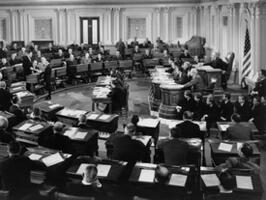
The news goes from bad to worse for Congress, as voters offer their sharpest criticism of the legislature to date.
A new Rasmussen Reports national telephone survey shows that just seven percent (7%) of Likely Voters rate the job Congress is doing as good or excellent. Seventy-five percent (75%) now say Congress is doing a poor job. (To see survey question wording, click here.)
(Want a free daily e-mail update? If it's in the news, it's in our polls). Rasmussen Reports updates are also available on Twitter or Facebook.
The survey of 1,000 Likely Voters was conducted on November 3-4, 2013 by Rasmussen Reports. The margin of sampling error is +/- 3 percentage points with a 95% level of confidence. Field work for all Rasmussen Reports surveys is conducted by Pulse Opinion Research, LLC. See methodology.

With funding for the new health care law the focus of the government shutdown and the law's health insurance exchanges stumbling into existence, President Obama's positives - and negatives - have jumped when it comes to his handling of the health care issue.
Forty-four percent (44%) of Likely U.S. Voters now rate Obama's performance in this area as good or excellent, up nine points from 35% last month but in line with most previous surveys this year. A new Rasmussen Reports national telephone survey finds that slightly more (47%) give the president poor marks for his handling of health care. That's an eight-point increase from September and a high for the year to date. (To see survey question wording, click here.)
(Want a free daily e-mail update? If it's in the news, it's in our polls). Rasmussen Reports updates are also available on Twitter or Facebook.
The survey of 1,000 Likely Voters was conducted on November 1-2, 2013 by Rasmussen Reports. The margin of sampling error is +/- 3 percentage points with a 95% level of confidence. Field work for all Rasmussen Reports surveys is conducted by Pulse Opinion Research, LLC. See methodology.

With Detroit's bankruptcy now being challenged in federal court, Americans are more supportive of a federal bailout to make sure retired public workers get their full pension benefits, even though most still expect more major cities to declare bankruptcy soon.
A new Rasmussen Reports national telephone survey finds that 36% of American Adults now believe the federal government should bail out Detroit to make sure the pensions of the city's retired employees are paid in full. A plurality (45%) remains opposed to a federal bailout of Detroit. Nineteen percent (19%) are undecided. (To see survey question wording, click here.)
(Want a free daily e-mail update? If it's in the news, it's in our polls). Rasmussen Reports updates are also available on Twitter or Facebook.
The survey of 1,000 Adults was conducted on November 2-3, 2013 by Rasmussen Reports. The margin of sampling error is +/- 3 percentage points with a 95% level of confidence. Field work for all Rasmussen Reports surveys is conducted by Pulse Opinion Research, LLC. See methodology.
Most Americans think even though someone is old enough to vote or die for their country, they're not mature enough yet to decide whether they want to smoke.
Only 29% of American Adults favor raising the current voting age from 18 to 21, according to a new Rasmussen Reports national telephone survey. Sixty-four percent (64%) oppose raising the legal age to vote. (To see survey question wording, click here.)
(Want a free daily e-mail update? If it's in the news, it's in our polls). Rasmussen Reports updates are also available on Twitter or Facebook.
The survey of 1,000 Adults nationwide was conducted on October 31-November 1, 2013 by Rasmussen Reports. The margin of sampling error is +/- 3 percentage points with a 95% level of confidence. Field work for all Rasmussen Reports surveys is conducted by Pulse Opinion Research, LLC. See methodology.
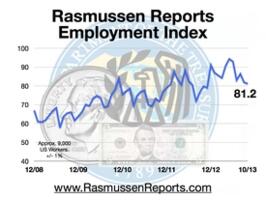
The Rasmussen Employment Index which measures worker confidence fell another point in October to a new low for the year.
At 81.2, worker confidence is down one point from September and down 13 points from this year’s high of 94.4 in May. This is the lowest level of confidence measured since last November but still up slightly from 79.9 this time last year.
(Want a free daily e-mail update? If it's in the news, it's in our polls). Rasmussen Reports updates are also available on Twitter or Facebook.
The survey of 9,625 working Americans was conducted in October 2013 by Rasmussen Reports. The margin of sampling error is +/- 1 percentage points with a 95% level of confidence. Field work for all Rasmussen Reports surveys is conducted by Pulse Opinion Research, LLC. See methodology.
