Hillary to Bernie Supporters: Don't Vote For Me By Ted Rall
Hey, Bernie supporters: Hillary has a talking point for you.

Hey, Bernie supporters: Hillary has a talking point for you.

No more Trump Change: The deal’s been sealed.

This Sunday is Mother’s Day, and while Americans don’t think much of it as a holiday, most still believe that being a mother is the most important role a woman can play.
Republican party leaders may have worried that Donald Trump would not only lose the general election for the presidency, but would so poison the image of the party as to cause Republican candidates for Congress and for state and local offices to also lose. Now they seem to be trying to patch things up, in order to present an image of unity before the general elections this fall.

Rasmussen Reports’ final weekly Trump Change survey finds perceptions among Republicans and all voters that Donald Trump is the likely GOP presidential nominee at all time highs. The survey was begun before Ted Cruz and John Kasich quit the race.
So Republicans now have a presumptive nominee -- one headed to a clear delegate majority without visible opposition -- sooner than the Democrats. It's another way in which this year's presidential race has defied expectations and ignored precedent.
"The two living Republican past presidents, George H. W. Bush and George W. Bush, have no plans to endorse Trump, according to their spokesmen." So said the lead story in The Washington Post.
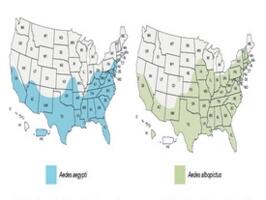
As warmer weather arrives in much of the United States, most Americans see the mosquito-borne Zika virus as a major potential health problem but are confident public health agencies can handle it.

Right now as other candidates consider whether to fall in line behind their party’s presumptive standard-bearer, it’s a curse more than a blessing to endorse Hillary Clinton or Donald Trump.
Voters remain lukewarm about President Obama's national security policies and expect more of the same if Hillary Clinton moves back into the White House next January. Donald Trump, if elected, will definitely change things, voters say, but not necessarily for the best.

Americans continue to feel their freedom is at risk from an all-powerful government.
The left has concocted a lucrative category of politically correct victims: "climate refugees." It's the new Green racket.

It’s about time for the latest crop of college graduates to enter the workforce, but Americans still aren’t confident about the job colleges are doing preparing those young minds.
“The whole framework of the presidency is getting out of hand. It’s come to the point where you almost can’t run unless you can cause people to salivate and whip on each other with big sticks. You almost have to be a rock star to get the kind of fever you need to survive in American politics.”
— Hunter S. Thompson, Fear and Loathing on the Campaign Trail ’72 (1973)
The Republican and Democratic presidential nominees have been chosen. Ignore the deluded supporters of Bernie Sanders and Ted Cruz. It's over. The odds at ElectionBettingOdds.com make it clear: It will be Donald vs. Hillary.

Some people have questioned our findings reported Monday that Donald Trump has edged slightly ahead of Hillary Clinton among likely voters nationally. Given the margin of error, it’s more accurate to call the race a tie.

Barring an act of God, both major political parties now have their presidential nominees, and the mud’s about to fly.

Even before the votes are counted in today’s Indiana primaries, most Republicans think Ted Cruz and John Kasich should quit the race for their party’s presidential nomination. Democrats, on the other hand, aren’t so eager for Bernie Sanders to drop out.
The unexpected successes, forecast by almost no one 12 months ago, of Donald Trump and Bernie Sanders in winning 40 percent and 42 percent in Republican and Democratic primaries and caucuses is widely taken as evidence of raging discontent among American voters.
Random thoughts on the passing scene:
One of the problems with being a pessimist is that you can never celebrate when you are proven right.
