Clinton, Trump Still Unpopular With Most Voters
Most voters still share unfavorable opinions of the two major party candidates for president.
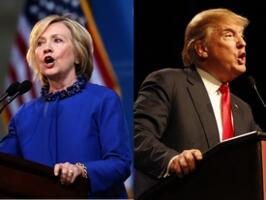
Most voters still share unfavorable opinions of the two major party candidates for president.
Donald Trump is still in this race, and he can still win it.
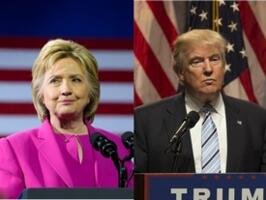
Nearly half of voters still say their choice this presidential election will be the lesser of two evils, although Trump supporters feel that way more strongly than Clinton voters do. Fortunately for both major party candidates who have been beset with questions about their honesty and integrity, most voters put their policy positions ahead of their character.
How many more broadcast bust-ups will it take before America finally decides to make its presidential election debates tolerable again? I can't take it anymore. Can you?

The nature of U.S. involvement in the ongoing war in Syria has been one of the key foreign policy issues this presidential election season, and most voters now favor a no-fly zone in the embattled country despite increasing concern that it may bring the United States into a military confrontation with Russia.
Most voters aren’t buying the story that the Russians are trying to manipulate the election for Donald Trump but think the U.S. media is trying to swing things for Hillary Clinton.
The greatest moral claim of the political left is that they are for the masses in general and the poor in particular. That is also their greatest fraud. It even fools many leftists themselves.
"Remember, it's a rigged system. It's a rigged election," said Donald Trump in New Hampshire on Saturday.
Which party is going to control the House and hold a majority in the Senate in January 2017? Even if you regard the presidential contest as over -- a proposition for which there is powerful evidence, including Donald Trump's current campaign message choices -- the answers to those questions are, respectively, mildly and very unclear.
Twenty-nine percent (29%) of Likely U.S. Voters think the country is heading in the right direction, according to a new Rasmussen Reports national telephone and online survey for the week ending October 13.
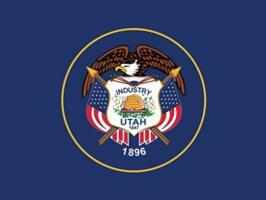
Utah hasn’t supported a Democratic presidential candidate since 1964, but new polling suggests that it could help elect one this year.
Donald Trump views radical Islamic terrorism as the number one threat to the United States and has contradicted many in the foreign policy establishment by saying Russia would make a good ally in fighting that threat. Republicans and Trump supporters strongly agree that radical Islam is the bigger threat, but Democrats and Clinton voters tend to rate Russia as just as big a danger.
When this mess of a presidential election is finally over, the winner’s going to have to deal with the mess the country’s in. But you sure couldn’t tell it from the current presidential campaign.
Donald Trump is a cat with 12 or 13 lives.
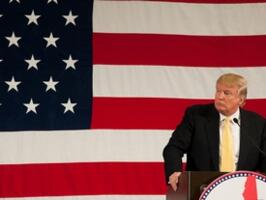
A growing number of Republican officials are asking their party’s nominee Donald Trump to drop out of the presidential race, and one-out-of-four GOP voters think that's a good idea. Most do not, and Trump supporters overwhelmingly second that emotion.
Will Hillary Clinton clean out the nest of anti-Catholic bigots in her inner circle? Or is anti-Catholicism acceptable in her crowd?
"It is so nice that the shackles have been taken off me and I can now fight for America the way I want to," Donald Trump tweeted at the reasonable hour of 10 a.m. on Tuesday.
Following the news that the United Nations has appointed a new secretary general, voters say they like the UN, but don’t necessarily agree it’s worth the cost to the United States.
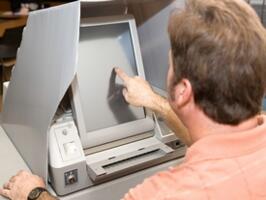
The U.S. Department of Homeland Security has confirmed hacking attempts on election systems in more than 20 states and has offered to provide states free testing of their systems before Election Day. While most voters are concerned about their state’s election system being hacked, they think state and local officials will do a better job protecting their vote than the feds will.
