36% Say U.S. Heading in Right Direction
Thirty-six percent (36%) of Likely U.S. Voters now think the country is heading in the right direction, according to a new Rasmussen Reports national telephone and online survey for the week ending August 10.

Thirty-six percent (36%) of Likely U.S. Voters now think the country is heading in the right direction, according to a new Rasmussen Reports national telephone and online survey for the week ending August 10.

Most voters continue to believe that American society is generally fair and decent, but they don't feel as strongly when it comes to President Trump’s views on society.

President Donald Trump's pledge to "Make America Great Again" requires nothing less than reigniting economic growth and prosperity. Wealth creation is essential. As Congress pivots to tax reform -- which is crucial to the wealth creation -- the president could take matters into his own hands by issuing an executive order to index capital gains for inflation.

Late last week, following the release of new employment numbers by the Bureau of Labor Statistics, President Trump touted the success of more than one million new jobs added to the economy since he took office.
Bernie Sanders has joined the chorus of politicians and pundits who warn that the U.S. is sliding into authoritarianism under Trump. But he's kind of wrong about how.
As tensions with North Korea continue to rise, President Trump’s job approval also turned back up at week’s end.
Most voters think it’s likely the United States will soon be at war with North Korea.
Would a fair society have exactly the same percentage of men and women, of whites and blacks and Latinos and Asians, in every line of work and occupational category? If your answer is yes, and that any divergence from these percentages must necessarily result from oppression, then you qualify for a job at Google.If not, forget about it.
"When a man knows he is to be hanged in a fortnight," Samuel Johnson observed, "it concentrates his mind wonderfully."

With the Dow Jones continuing to reach all-time highs and unemployment at its lowest level in years, consumers aren’t just feeling better about the economy and their own personal finances. They’re starting to feel better about spending, too.
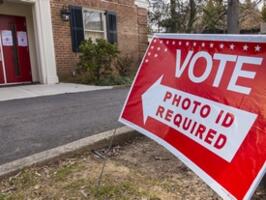
Missouri held its first election this week after enacting voter identification laws, and officials say it went smoothly. Most voters continue to favor such laws, though slightly more now believe they may be discriminatory.

The Dow Jones Index has been enjoying record highs since Donald Trump was elected president, but most Americans remain on edge that the stock market could collapse again.
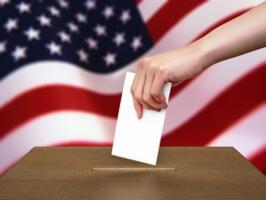
Some groups are suing the federal government over President Trump’s voter fraud commission, claiming privacy and civil rights violations. While a majority of voters still considers voter fraud a serious problem, a growing number are now downplaying the severity of the issue.
The 2017 Alabama special election for the U.S. Senate kicks off with party primaries this coming Tuesday (Aug. 15). Should one or both parties have no candidate win a majority that day, a primary runoff will take place on Sept. 26. Both sides have crowded fields, but given the dark red hue of the state, most expect the eventual Republican nominee to hold the seat for the GOP. The appointed incumbent, Sen. Luther Strange (R), appears somewhat vulnerable, at least in the Republican primary.
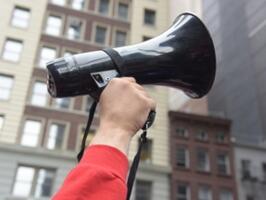
Nissan workers in Mississippi recently voted against joining the United Auto Workers (UAW), a blow to the already struggling union presence in the south.
Here is a radical proposition: The public has a right to know the immigration status and history of foreign criminal suspects. Their entrance and employment sponsorship records should not be treated like classified government secrets -- especially if the public's tax dollars subsidized their salaries.
A sizable majority of voters still opposes giving illegal immigrants the vote, even in local elections. Democrats remain much more supportive of the idea than other voters do, however.
Are you tired of winning yet?
In the long march to remaking American greatness, President Trump has certainly attracted plenty of scorn and ridicule from all the predictable and boring corners over all the predictable and boring nonissues.

While unemployment is trending down and Americans are more upbeat about their job prospects than they have been in years, that doesn't mean they expect a bigger paycheck.
Have a gun license? Plan to bring your gun to my hometown? Don't.
