Voters Not Convinced Tax Increases On Wealthiest Americans Benefit the Economy
Most voters agree that government spending and taxes are too high, but they’re divided over the impact that raising taxes on the wealthiest Americans would have.

Most voters agree that government spending and taxes are too high, but they’re divided over the impact that raising taxes on the wealthiest Americans would have.

"This year," President Trump stated in his widely viewed and positively rated State of the Union address, "America will recognize two important anniversaries that show us the majesty of America's mission and the power of American pride."
If the pollsters at CNN and CBS are correct, Donald Trump may have found the formula for winning a second term in 2020.
After years of repeated violations by the Russians, President Trump is pulling the United States out of one of its last major nuclear arms treaties with the former Soviet Union. Voters remain pessimistic about U.S. relations with Russia and worry that another Cold War is on the way.
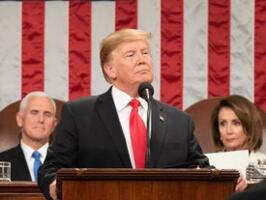
Despite President Trump’s call for unity in this week’s State of the Union address, most voters don’t expect Democrats in Congress to respond and blame partisan politics for the gridlock.
Saying that anything in the annals of American political history is “unique” or “unprecedented” is dangerous, for the simple fact that the past is filled with so many oddities from which we can draw parallels. That said, we’re struggling to come up with something equivalent to what we’ve seen in Virginia over the past week.
New York state has just adopted a law that will allow abortions in the final three months of a pregnancy, but even voters who consider themselves pro-choice aren’t eager to see a similar law in their state.
Support by several prominent new Democratic members of the House has raised the profile of the effort to punish Israel economically for its treatment of the Palestinians, but few voters are ready to join in.
Crying "hate" is a lazy way to debate. But in the Beltway, where honest discussion and vigorous deliberation are desperately needed, the rhetorical sloth is so thick you need a Big Foot circular saw to cut it.
San Francisco is one of the richest cities it the world. It's given us music, technology and elegant architecture.
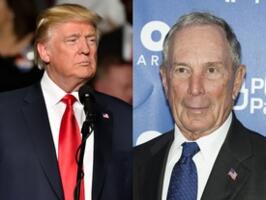
Former New York City mayor Michael Bloomberg, a centrist Democrat, appears to be contemplating a 2020 presidential run, and he stands a chance against President Trump.

When tracking President Trump’s job approval on a daily basis, people sometimes get so caught up in the day-to-day fluctuations that they miss the bigger picture. To look at the longer-term trends, Rasmussen Reports compiles the numbers on a full-month basis, and the results for Trump’s presidency can be seen in the graphics below.
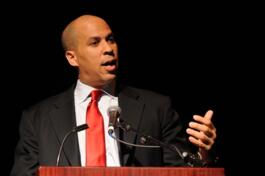
Like many of the Democratic presidential wannabes, newly declared candidate Cory Booker has a name recognition problem. So voters aren’t giving him much of a chance at this point of going all the way.
"Once that picture with the blackface and the Klansman came out, there is no way you can continue to be the governor of the commonwealth of Virginia."
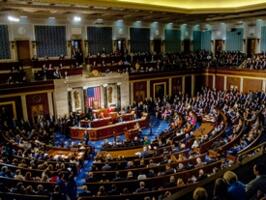
Following a record-long government shutdown over an inability to reach an agreement on border wall spending, even more voters want to see Congress lean in to dealing with illegal immigration. However, they’re less confident these days that President Trump and the new Democratic majority in the House can work together to achieve that goal.
Well, what do you know! It turns out that amateur economist Donald J. Trump knows more about sound monetary policy than Fed chairman Jerome Powell and his team of hundreds of Ph.D. economists.

Thirty-one percent (31%) of Likely U.S. Voters think the country is heading in the right direction, according to a new Rasmussen Reports national telephone and online survey for the week ending January 31.

Despite the post-government shutdown delay, President Trump can still expect a big audience for his State of the Union speech tomorrow night.

In a year where the Democratic party swore in the most diverse, most female class in history, most voters see that trend continuing all the way to the White House.

The job market and the manufacturing sector are booming, completely unaffected by the just concluded federal government shutdown. But Americans are still unhappy.
