Get Off the Sidelines: #StandWithICE By Michelle Malkin
Dear fellow patriots: It's time to stop making nice with those who are waging war on ICE.
Dear fellow patriots: It's time to stop making nice with those who are waging war on ICE.
Why does most of Africa stay poor while other parts of the world prosper?
People blame things like climate, the history of colonialism, racism, etc.
Voters give positive marks to the U.S. economy these days, but thanks to the usual partisan division on most all things Trump, they tend to think the president has little or nothing to do with it.
President Donald Trump, who canceled a missile strike on Iran, after the shoot-down of a U.S. Predator drone, to avoid killing Iranians, may not want a U.S. war with Iran. But the same cannot be said of Bibi Netanyahu.
Last week, I gave a talk to high-wealth investors in San Francisco -- not exactly an audience of left-wing activists -- and people kept asking me the question of the day: "Will there be a recession?" My reply: I'd never say never, but I don't see a recession in 2020. And if we get a trade deal with China, the economy is going to soar.
Forty-one percent (41%) of Likely U.S. Voters think the country is heading in the right direction, according to a new Rasmussen Reports national telephone and online survey for the week ending August 22.
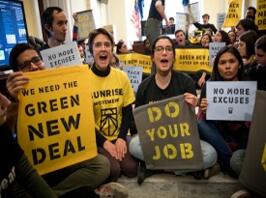
Voters are almost evenly divided on a multi-trillion dollar Green New Deal plan to tackle climate change by Democratic presidential hopeful Bernie Sanders that would impact nearly all of the federal government.
While the moniker “fake news” is typically reserved for cable news and some of the more prominent newspapers in America, the term could also be applied to presidential polls. How many pollsters predicted Hillary Clinton would win the 2016 election by a landslide up to and including the day of the actual election?

In surveys last week, this is what America told Rasmussen Reports...
There is no other way to say it: It was a political assassination.
Osama bin Laden was unarmed. SEALs captured him alive. Following brazenly illegal orders from Washington, they executed him. "The (Obama) administration had made clear to the military's clandestine Joint Special Operations Command that it wanted bin Laden dead," The Atlantic reported on May 4, 2011.
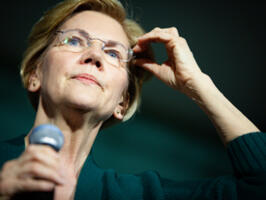
Voters think Democratic presidential hopeful Elizabeth Warren has lied about her Native American heritage in the past, but most also say it’s not a critical issue when it comes to how they will vote.
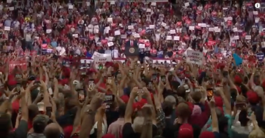
When Bill Clinton successfully unseated sitting President George HW Bush in 1992, Clinton’s campaign manager James Carville coined the phrase, “The economy, stupid” as a campaign theme.
To those of us of who learned our U.S. history from texts in the 1940s and '50s, President Donald Trump's brainstorm of acquiring Greenland fits into a venerable tradition of American expansionism.
Will the demonstrations in Hong Kong come to be seen as the end of a 30-year period, beginning with the Tiananmen Square massacre in 1989, of the American-Chinese economic engagement and entanglement christened "Chimerica" by historian Niall Ferguson?

After the latest spate of mass shootings, Americans are less convinced than ever that violent video games and movies are to blame.
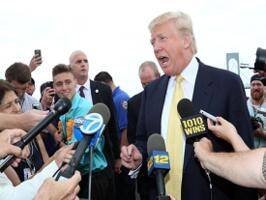
Distrust of political news reporting remains at a record high, with just over half of voters now convinced that most in the media are out to get President Trump.
Hint: It’s Not the One You Think.
— More Republicans identify as conservative than Democrats identify as liberal.
— This has led to questions about whether ideological fissures in the Democratic Party could make it harder for the party to rally around its eventual nominee.
— However, Democrats actually are more united on individual issue positions than Republicans, which may mean the Democrats are less divided than ideological self-placement suggests.
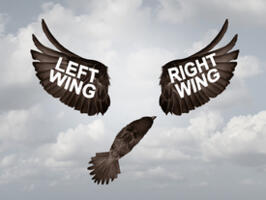
Voters still don’t see eye-to-eye with most members of Congress and continue to believe that Americans aren’t truly represented by either of the major political parties.
I learned last week from a Silicon Valley whistleblower, who spoke with the intrepid investigative team at Project Veritas, that my namesake news and opinion website is on a Google blacklist.
President Donald Trump promised he'd get rid of bad rules.
