Most Voters Don’t See a Threat to Roe v. Wade
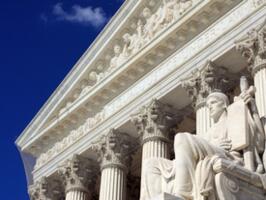
Just after the 46th anniversary of the landmark abortion case Roe v. Wade, most voters are pro-choice and think the ruling is likely to stick for years to come.
It's School Choice Week.
School choice is a noble cause. In much of America, parents have little or no control over where their kids attend school. Local governments assign schools by ZIP code.
Participation in this past Sunday’s Women’s March appears to have gone down dramatically from two years ago when the first such march was held, but voters are little changed in their view that the annual event is good for women in general.
On Saturday, Donald Trump shrewdly flipped the table on Nancy Pelosi in the government shutdown standoff. He has now proposed a grand bargain on immigration: legalization of some 1 million so-called Dreamers -- the foreigners who were brought into the U.S. illegally by their parents -- and an immediate end to the shutdown, if she agrees to expand funding to $5.7 billion for the wall.
"Those who make peaceful revolution impossible ... make violent revolution inevitable," said John F. Kennedy.
A federal judge in New York has ruled against the Trump administration’s attempt to restore a citizenship question to the 2020 census, even though it’s a question most Americans want to ask.
Thirty-three percent (33%) of Likely U.S. Voters think the country is heading in the right direction, according to a new Rasmussen Reports national telephone and online survey for the week ending January 17.
This Martin Luther King, Jr. Day, Americans aren’t particularly optimistic about the state of race relations in this country today.
Voters continue to lack trust in the federal government’s ability to get things right, and most still believe the government is out for itself.
To quote the Bard, the Trump vs. Pelosi show is “full of sound and fury, signifying nothing.” So the partial government shutdown enters a record-breaking fifth week.
It was no coincidence that Donald Trump scheduled a trip to Britain to promote one of his golf courses in Scotland, on June 23, 2016. That was the day of the Brexit referendum in which 52 percent of the electorate --17.4 million voters, more than any party has ever won in a general election -- voted for the UK to leave the European Union.
The 50-50 nation marches on. Half the voters in the country don’t like new House Speaker Nancy Pelosi, the highest ranking Democrat in Washington, D.C., but just as many disapprove of Senate Majority Leader Mitch McConnell, Congress’ top Republican.
Most voters aren't scared of the federal government, but they think there's more of it than the country's Founders intended.
"Treaties are like roses and young girls. They last while they last."
So said President Charles De Gaulle, who in 1966 ordered NATO to vacate its Paris headquarters and get out of France.
As teachers in Los Angeles, home to the nation’s second-largest school district, continue to strike, support for teachers’ unions remains up. However, a majority think teachers' unions put membership protection over the quality of education.
The current teachers’ strike in Los Angeles and those in other states last year have not cooled Americans’ support for labor unions.
Voters don’t care too much for the federal government, and the number who say they have been badly hurt by the continuing government shutdown remains small.
One of the world's most successful brands committed ideological hara-kiri this week. Recognized around the world as a symbol of manly civility for more than a century, Gillette will now be remembered as the company that did itself in by sacrificing a massive consumer base at the altar of progressivism.
This government shutdown is now longer than any in history. The media keep using the word "crisis."
"Shutdown sows chaos, confusion and anxiety!" says The Washington Post. "Pain spreads widely."
An increasing number of elected Democrats including several presidential hopefuls are endorsing a so-called Green New Deal although the details vary. Democratic voters love the concept, but other voters still aren't convinced.