Voters Favor Trump’s Impeachment More Than Clinton’s
There’s more voter support for impeaching President Trump than there is for impeaching former President Clinton after all these years.
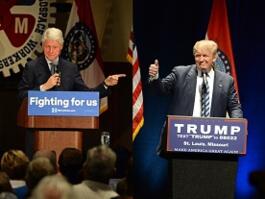
There’s more voter support for impeaching President Trump than there is for impeaching former President Clinton after all these years.

Voters see little chance that Republicans will jump on the Democrats’ impeachment bandwagon. Most Democrats think that’s because of GOP party loyalty, but then most Republicans believe the impeachment is driven not by broken laws but by President Trump’s defeat of Hillary Clinton in 2016.
Voters are ready to jail or fire senior law enforcement officials who illegally targeted President Trump, but most think they are unlikely to be punished.

Immigration will be central to next year’s presidential election, and Rasmussen Reports has conceived its Rasmussen Reports Immigration Index as a barometer of voter attitudes on this critical issue.

Most voters view the recent mass shooting by a Saudi aviation student at the Naval Air Station in Pensacola, Florida as terrorism. They also continue to question whether Muslims are treated unfairly in this country.

Voters aren’t overly enthusiastic about either of the two major political parties, but they’re less confident than ever that a genuinely competitive third party would make a difference.

Impeachment isn’t shaping up as the most critical issue in next year’s elections, and voters still tend to think President Trump’s removal from office would hurt the economy. Democrats, of course, disagree.

Voters still generally feel the president of the United States has about the right level of power, but a sizable number, especially Democrats, worry that the presidency is getting more powerful under President Trump.

With Kamala Harris quitting the race, some Democrats are already worrying about the whiteness of the leading presidential hopefuls. Most Democratic voters – and most blacks – agree that it’s important for the party to nominate a person of color or woman this time around, but hope is fading.
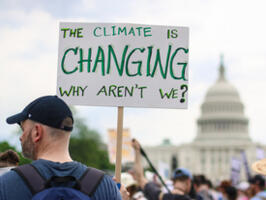
Voters see a climate change catastrophe ahead and tend to blame humans rather than Mother Nature for it. Those who blame humans want the government to do something about the threat but aren’t prepared to limit air travel or stop eating meat.

NATO was created after World War II to protect a war-ravaged Europe from the communist Soviet Union, but 70 years later voters here question whether U.S. taxpayers should still pay the biggest bill and wonder what they’re getting for it.
Most voters don’t favor a ban on so-called hate speech, but a sizable number are prepared to bar offenders from political office.
Joe Biden remains the candidate to beat in the race for the 2020 Democratic presidential nomination. In the battle for second place, Bernie Sanders and Elizabeth Warren have lost ground, while Pete Buttigieg is gaining.

A lot of voters say they’re following the House impeachment hearings, but Democrats don’t seem as interested as they were when the hearings first started.

The new trade deal the Trump administration has negotiated with Canada and Mexico is languishing in the House of Representatives. While voters still regard it as an improvement over the much-maligned NAFTA, they’re a lot less confident that Congress will approve it.

Voters strongly defend Americans’ right to a gun but still tend to feel a ban on assault rifles isn’t a bad idea.
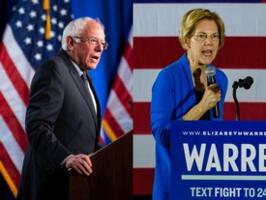
Democrats are far less convinced than Republicans and unaffiliated voters that a free-market system is superior to a socialist one and are much more willing to vote for a socialist candidate. Those under 40 are a lot more responsive to the siren call of socialism than older voters are.
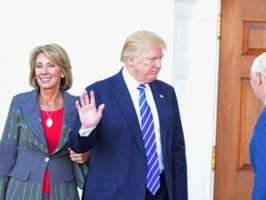
President Trump’s Cabinet seems to have a revolving door at times, but then most voters agree this president doesn’t depend on his Cabinet like the majority of his predecessors.

Come together? Not likely, voters say, if most politicians have their way.

Voters see a bigger threat from President Trump’s opponents over policy issues than from his supporters if Democrats succeed in removing him from office. One-in-three still see the threat of civil war in the near future.
