Voters Still Believe In Their Vote
Voters continue to feel that their vote counts.
Voters continue to feel that their vote counts.

Voters tend to think Donald Trump would do a better job protecting them from terrorists.
Donald Trump’s trust advantage over Hillary Clinton in the areas of the economy and immigration have all but vanished, although independent voters continue to express a lot more faith in the GOP nominee.
Americans are feeling friendlier toward Mexico these days but still think it should offset the cost to the United States of the illegal immigrants it’s sending our way.
Some have suggested that Donald Trump has hidden support among voters who are unwilling to say publicly where they stand because they’re fearful of criticism. We won’t know for sure until Election Day, but Republicans are clearly more reluctant than Democrats this year to say how they are going to vote.

A majority of voters believe the media are in the driver’s seat this presidential election season.
Most voters think both of the major presidential candidates are liars and give them equally low marks as potential used car salesmen.
Most U.S. voters think U.S. foreign policy should focus on what's best for America but believe President Obama is more interested in what's best for the world.
The upcoming president election is shaping up as a referendum on the federal government and its actions. Supporters of Donald Trump really dislike the feds, while voters who support Hillary Clinton think they’re great.
Confidence in the federal government remains low, and most voters still consider the feds a threat to their constitutional rights.
The White House insists that blacks are better off after President Obama’s eight years in office, but voters strongly disagree. No wonder Republican nominee Donald Trump is reaching out to black voters, saying they have “nothing to lose” by supporting him.
Voter anger at the government, an important driver in this year’s presidential race, remains high. Republicans continue to be far angrier at the government than Democrats and unaffiliated voters are, but all three groups are equally mad at Congress.
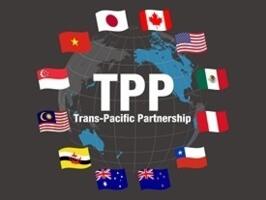
The Trans-Pacific Partnership (TPP) is a mega-trade deal involving the United States and 11 other Pacific Rim countries. President Obama is hoping to get it through Congress before he leaves office because Donald Trump and Hillary Clinton have both vowed to stop it. Do voters care?
Americans are more negative than ever about the internet’s impact on journalism and politics.
Most voters continue to oppose the U.S. government’s decision to cede its last vestige of control over the internet to an international authority and worry that some countries may try to censor web content.

Republican presidential nominee Donald Trump says he would put an end to “nation building," a term that in recent years has been used to describe stepped-up efforts to establish democracies in the Middle East by use of the U.S. military and U.S. taxpayer dollars. Few voters believe the government's nation-building efforts have been a success, and most agree with Trump that they should be ended.
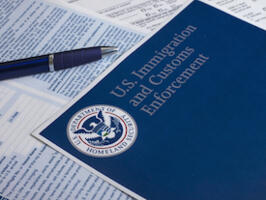
Most voters support Donald Trump’s plan for temporarily restricting immigration from countries with a history of terrorism and for testing to screen out newcomers who don’t share America’s values. Most also agree that such a test is likely to reduce the number of terrorists entering the United States.

Democratic nominee Hillary Clinton hasn’t had a formal press conference since late last year, largely avoiding media questions for the entire primary season. Republican nominee Donald Trump’s routine press conferences often seem to do him more harm than good. Do voters want presidential candidates to meet the press?
A new Rasmussen Reports national telephone and online survey finds that 82% of Likely U.S. Voters think it is important for the major presidential candidates to hold regular press conferences to answer questions from reporters, with 48% who say it is Very Important. Just 17% view regular press conferences as unimportant, and that includes only three percent (3%) who feel they are Not At All Important. (To see survey question wording, click here.)
(Want a free daily e-mail update? If it's in the news, it's in our polls). Rasmussen Reports updates are also available on Twitter or Facebook.
The survey of 1,000 Likely Voters was conducted on August 15-16, 2016 by Rasmussen Reports. The margin of sampling error is +/- 3 percentage points with a 95% level of confidence. Field work for all Rasmussen Reports surveys is conducted by Pulse Opinion Research, LLC. See methodology.
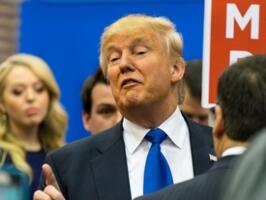
Most voters still think the media is more interested in controversy than in the issues when it comes to the presidential race, and supporters of Donald Trump strongly believe the coverage of his public comments is a classic example. Most Hillary Clinton supporters say Trump’s just a sloppy speaker.
Following news reports that federal investigators are taking a deeper look at the charitable foundation established by Bill and Hillary Clinton, voters are even more suspicious that the Democratic presidential nominee traded favors to donors while she was secretary of State.
(Want a free daily e-mail update? If it's in the news, it's in our polls). Rasmussen Reports updates are also available on Twitter or Facebook.
The survey of 1,000 Likely Voters was conducted on August 11 and 14, 2016 by Rasmussen Reports. The margin of sampling error is +/- 3 percentage points with a 95% level of confidence. Field work for all Rasmussen Reports surveys is conducted by Pulse Opinion Research, LLC. See methodology.
