Should Tobacco Smoking Be Against the Law?
Despite the health risks of tobacco smoking, Americans still don’t want to ban it altogether.

Despite the health risks of tobacco smoking, Americans still don’t want to ban it altogether.

Increasing problems in the inner city including rocketing murder rates have prompted a number of politicians to call for more government funding aimed at low-income Americans. But most continue to question the effectiveness of federal poverty programs and think too many are already dependent on the government’s dime.

President Obama announced this week that the federal government is changing the name of Alaska's highest mountain, Mount McKinley, back to Denali, an old Indian name. Voters in Alaska have long sought the change but haven't been able to get the U.S. Department of Interior's approval.
With officers murdered in Texas and Illinois in just the last few days, most voters now believe the police are under attack in America and blame politicians critical of the cops for fanning the flames.
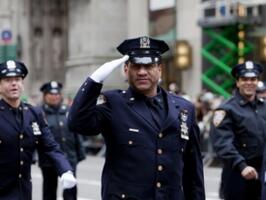
While protests continue in Ferguson, Missouri one year after the shooting death of a black teenager by a white police officer, most Americans have an even more positive view of their local police and don’t consider their tactics out of line.
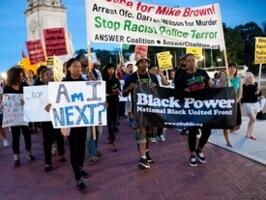
Americans don’t have much good to say about the protests this week in Ferguson, Missouri on the one-year anniversary of the Michael Brown incident.

Many regard the 1960 novel "To Kill A Mockingbird" as one of the most significant American literary achievements of the 20th Century. It was author Harper Lee's only book, so the literary world - and countless readers - were stunned when it was recently announced that Lee had written a sequel, "Go Set A Watchman," which had just been discovered in a bank safe-deposit box.
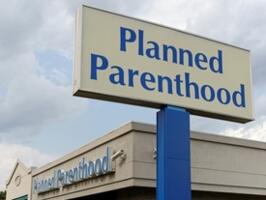
Conservatives complain that the killing of Cecil the Lion in Africa is getting more attention from the media than the videos exposing Planned Parenthood’s sale of fetal body organs, but both stories are being widely followed.

The U.S. Food and Drug Administration announced last week that food companies have three years to phase out partially hydrogenated oils, the main source of trans fat, and voters appear to be on board with the idea.

Is America ready – finally – to go metric along with the rest of the world? No more miles, pounds and inches, but kilometers, grams and centimeters instead.
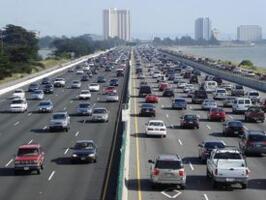
Most Americans admit they've been in a traffic accident while behind the wheel.

Google admits its new driverless cars have had a few minor accidents but says the latest model will be ready for the road as early as this summer. Americans are a bit more likely to consider buying a driverless car these days but are still not convinced they will make the roads safer.
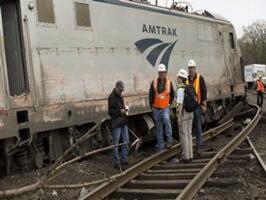
Few Americans say they use mass transit regularly, but they remain confident in its safety despite the recent Amtrak train derailment near Philadelphia that killed eight people. Most also don't feel more government spending on infrastructure will help prevent such crashes.

Adults feel more strongly in the importance of a child growing up in a two-parent home, but they also think one of their parents was more influential than the other in their own upbringings.

Some say you’re not supposed to discuss money or politics at the dinner table. Could that be for good reason?

Today is the National Day of Prayer, a 63-year-old tradition that most Americans continue to honor.

American adults still believe strongly their fellow citizens could use some manners.

One-in-five Americans are responding to the devastating earthquake in Nepal with money from their pocket, and most think the spread of social media helps in situations like this.
Looks like the North and South still don’t see eye-to-eye on the Civil War 150 years after it ended, but one-out-of-three Americans don’t even know when that cataclysmic conflict took place. (To see survey question wording, click here.)
(Want a free daily e-mail update? If it's in the news, it's in our polls). Rasmussen Reports updates are also available on Twitter or Facebook.
The survey of 800 American Adults was conducted on April 12-13, 2015 by Rasmussen Reports. The margin of sampling error is +/- 3.5 percentage points with a 95% level of confidence. Field work for all Rasmussen Reports surveys is conducted by Pulse Opinion Research, LLC. See methodology.

Just over half of voters think anti-gay discrimination is a problem in America, but many also still believe the government is oversensitive to the concerns of minority groups.
A new Rasmussen Reports national telephone survey finds that 54% of Likely U.S. Voters consider discrimination against gay and lesbian people to be a serious problem in America today, although only 23% consider it a Very Serious one. Forty-three percent (43%) do not think such discrimination is a serious problem, with 18% who say it’s Not At All Serious. (To see survey question wording, click here.)
(Want a free daily e-mail update? If it's in the news, it's in our polls). Rasmussen Reports updates are also available on Twitter or Facebook.
The national survey of 1,000 Likely Voters nationwide was conducted March 30-31, 2015 by Rasmussen Reports. The margin of sampling error is +/- 3.5 percentage points with a 95% level of confidence. Field work for all Rasmussen Reports surveys is conducted by Pulse Opinion Research, LLC. See methodology.
Additional information from this survey and a full demographic breakdown are available to Platinum Members only.
